How to Build an Emergency Fund: Global Guide to Financial Security in 2025
Imagine losing your job tomorrow, facing a major medical emergency, or dealing with urgent home repairs that cost thousands. For 73% of people worldwide, such emergencies would trigger a financial crisis because they lack sufficient emergency savings. But you don’t have to be part of that vulnerable majority.
An emergency fund is your financial safety net—money set aside specifically for unexpected expenses or income loss. It’s the foundation of financial security and the difference between weathering life’s storms and drowning in debt. Whether you’re starting from zero or looking to optimize your existing emergency savings, this comprehensive guide will show you how to build robust financial protection.
For additional insights on the importance of emergency funds, also check out our comprehensive emergency fund guide which covers specific building and management strategies.
What Is an Emergency Fund?
An emergency fund is a dedicated savings account containing money reserved exclusively for genuine financial emergencies. Unlike other savings goals, this fund serves one critical purpose: providing immediate access to cash when unexpected expenses arise or income suddenly stops.
What Qualifies as an Emergency?
True Emergencies:
- Job loss or income reduction (unemployment, business closure, hour cuts)
- Medical emergencies (surgery, hospitalization, urgent dental work)
- Major home repairs (roof damage, heating system failure, plumbing disasters)
- Car repairs (engine failure, transmission problems, accident repairs)
- Family emergencies (caring for sick relatives, emergency travel)
NOT Emergencies:
- Planned expenses (known car maintenance, annual insurance premiums)
- Wants disguised as needs (new clothes, electronics, vacation)
- Predictable costs (Christmas gifts, back-to-school expenses)
- Investment opportunities (stock market dips, real estate deals)
The key distinction: emergencies are unexpected, urgent, and necessary expenses that can’t be delayed or avoided.
How Much Should You Save?
The universal guideline is 3-6 months of essential expenses, but your ideal amount depends on several personal factors.
The 3-6 Month Rule Explained
This doesn’t mean 3-6 months of your current income, but rather the money needed to cover essential expenses for that period:
Essential Monthly Expenses:
- Housing (rent/mortgage, utilities, insurance)
- Food and groceries
- Transportation (car payments, insurance, fuel, public transit)
- Minimum debt payments
- Healthcare and insurance premiums
- Basic telecommunications (phone, internet)
Example Calculation: If your essential monthly expenses total $3,000:
- Minimum emergency fund: $9,000 (3 months)
- Ideal emergency fund: $18,000 (6 months)
Factors That Determine Your Target Amount
Lean Toward 3 Months If You Have:
- Stable employment with strong job security
- Dual-income household with both partners employed
- Government safety nets (strong unemployment benefits, universal healthcare)
- Family support available in emergencies
- Additional income sources (rental income, side business)
Lean Toward 6+ Months If You Have:
- Irregular income (freelance, commission-based, seasonal work)
- Single income household with dependents
- High-demand, specialized skills that take longer to replace
- Health issues or family members with chronic conditions
- Self-employment or business ownership
- Limited social safety nets in your country
Special Considerations by Region
Countries with Strong Social Safety Nets:
- Nordic countries, Germany, Canada, Australia
- May lean toward lower end (3-4 months) due to unemployment benefits and universal healthcare
Countries with Limited Safety Nets:
- United States, many developing countries
- Should target higher end (6+ months) due to healthcare costs and limited unemployment support
High-Cost Living Areas:
- Major cities like London, Tokyo, San Francisco, Zurich
- May need larger absolute amounts even if months-of-expenses remain the same
Where to Keep Your Emergency Fund
Your emergency fund needs three critical characteristics: safety, liquidity, and growth protection. Here’s how to choose the right account globally.
High-Yield Savings Accounts
Best for: Most people seeking the optimal balance of safety and returns.
Advantages:
- FDIC insured (US) or equivalent deposit protection in other countries
- Immediate access to funds
- Competitive interest rates (2-5% APY in many countries as of 2025)
- No market risk or volatility
Global Considerations:
- United States: Look for FDIC-insured accounts with competitive APY
- European Union: Ensure accounts have deposit guarantee protection up to €100,000
- United Kingdom: Check for FSCS protection up to £85,000
- Canada: CDIC protection up to CAD $100,000
- Australia: Government guarantee up to AUD $250,000
How to Find the Best Rates:
- Compare online banks vs traditional banks
- Look for promotional rates for new customers
- Consider credit unions or building societies
- Use comparison websites specific to your country
Money Market Accounts
Best for: Those wanting slightly higher returns with check-writing access.
Advantages:
- Higher interest rates than traditional savings
- Check-writing and debit card access
- FDIC insured or equivalent protection
- Minimum balance requirements may limit fees
Disadvantages:
- Usually require higher minimum balances
- May limit monthly transactions
- Interest rates can be variable
Certificates of Deposit (CDs) Laddering
Best for: Disciplined savers comfortable with slightly reduced liquidity.
Strategy: Divide emergency fund across multiple CDs with staggered maturity dates.
Example CD Ladder:
- 25% in 3-month CD
- 25% in 6-month CD
- 25% in 12-month CD
- 25% in 18-month CD
Advantages:
- Higher interest rates than savings accounts
- Predictable returns
- FDIC insured or equivalent protection
Disadvantages:
- Early withdrawal penalties
- Reduced immediate liquidity
- Interest rate risk if rates rise
What to Avoid for Emergency Funds
Checking Accounts:
- Minimal interest earnings
- Easy to accidentally spend
- Better for daily expenses, not emergency storage
Stock Market Investments:
- High volatility and market risk
- Could lose significant value when you need it most
- Not appropriate for emergency funds
Cryptocurrency:
- Extreme volatility
- Regulatory uncertainty
- Technical risks and potential loss
Real Estate or REITs:
- Illiquid - can’t access quickly
- Market risk and volatility
- Transaction costs reduce effectiveness
Step-by-Step Emergency Fund Building Strategy
Phase 1: Start Small (Target: $1,000-$2,000)
Why Start Small:
- Builds momentum and confidence
- Covers most minor emergencies
- Prevents reliance on credit cards for small unexpected expenses
Quick Start Strategies:
- Save windfalls immediately (tax refunds, bonuses, gifts)
- Round-up apps that save spare change automatically
- 30-day spending challenge - cut non-essential spending temporarily
- Sell unused items (electronics, clothes, furniture)
Timeline Goal: 2-3 months for initial emergency buffer
Phase 2: Build Your Foundation (Target: 1 Month of Expenses)
Focus: Calculate your essential monthly expenses and save that amount.
Monthly Expense Categories to Calculate:
- Housing: Rent/mortgage, utilities, property taxes, insurance
- Food: Groceries and essential dining
- Transportation: Car payments, insurance, fuel, maintenance, public transit
- Debt Minimums: Credit cards, student loans, personal loans
- Healthcare: Insurance premiums, prescriptions, regular medical costs
- Essential Services: Phone, basic internet, childcare
Calculation Example:
- Housing: $1,200
- Food: $400
- Transportation: $300
- Debt minimums: $250
- Healthcare: $150
- Essential services: $100
- Total monthly essentials: $2,400
Timeline Goal: 4-6 months to save one month of expenses
Phase 3: Reach Full Protection (Target: 3-6 Months)
Systematic Saving Approach:
- Automate savings - set up automatic transfers on payday
- Use percentage-based saving - save 20% of income if possible
- Leverage pay increases - direct raises and bonuses to emergency fund
- Optimize expenses - reduce recurring costs to free up savings capacity
Timeline Goal: 12-24 months to reach full emergency fund
Phase 4: Maintain and Optimize
Regular Reviews:
- Annual expense review - adjust target as life changes
- Account optimization - ensure you’re earning competitive interest
- Replenishment plan - rebuild fund quickly after using it
Building an Emergency Fund on a Low Income
Even with limited income, you can build financial security through strategic approaches and patience.
Micro-Saving Strategies
The $5 Challenge:
- Save every $5 bill you receive
- Can accumulate $300-500 annually with minimal effort
52-Week Challenge Modified:
- Start with $1 week one, $2 week two, etc.
- Adapt amounts to your income level
- Reverse the challenge (start high, go low) if year-end is difficult
Percentage-Based Approach:
- Start with 1% of income if that’s all you can manage
- Increase by 0.5% every few months
- Even 5% of a modest income builds meaningful savings over time
Expense Reduction Tactics
Housing Optimizations:
- Get roommates or consider house-sharing
- Negotiate rent or mortgage payments
- Explore utility assistance programs
- Consider relocating to lower-cost areas
Food Savings:
- Meal planning and bulk cooking
- Generic brands and store loyalty programs
- Community food banks and assistance programs
- Growing herbs or vegetables if possible
Transportation Alternatives:
- Public transit, cycling, or walking
- Car-sharing services instead of ownership
- Maintenance DIY skills to reduce repair costs
- Carpooling arrangements
Income Augmentation
Skill-Based Side Income:
- Tutoring, consulting, or freelance work
- Online services (writing, design, programming)
- Local services (pet-sitting, house-sitting, cleaning)
Asset Monetization:
- Rent out parking space or storage
- Sell crafts or homemade goods
- Rent out tools or equipment occasionally
Government and Community Resources:
- Research available assistance programs
- Tax credits and benefits you may qualify for
- Community organizations offering financial education
Advanced Emergency Fund Strategies
The Tiered Approach
Organize your emergency fund in multiple tiers for optimal accessibility and growth:
Tier 1: Immediate Access ($1,000-2,000)
- High-yield savings account
- Available within hours
- Covers most common emergencies
Tier 2: Short-Term Access (2-4 months expenses)
- Money market account or short-term CDs
- Available within days
- Slightly higher returns than Tier 1
Tier 3: Extended Emergency (2+ months expenses)
- Longer-term CDs or conservative investments
- Available within weeks
- Higher potential returns for extended unemployment
Geographic Diversification
For international travelers or expatriates:
Multi-Currency Considerations:
- Keep emergency funds in your primary expense currency
- Consider small amounts in local currency when living abroad
- Understand currency exchange risks and costs
Multi-Country Access:
- International banks with global presence
- Online banks with worldwide access
- Multiple debit cards for different banking systems
Business Owner Considerations
Separate Business Emergency Funds:
- Personal emergencies and business emergencies are different
- Business fund should cover 6-12 months of operating expenses
- Keep personal and business emergency funds completely separate
Income Volatility Planning:
- Larger emergency funds (6-12 months) due to irregular income
- Separate fund for tax obligations
- Consider professional disability insurance
Emergency Fund Mistakes to Avoid
Mistake 1: Keeping Too Much in Emergency Funds
The Problem: Excessive emergency savings earning low returns while missing investment opportunities.
The Solution: Once you reach 6-9 months of expenses, redirect additional savings to investments or other financial goals.
Mistake 2: Using Emergency Fund for Non-Emergencies
The Problem: Treating emergency fund as general savings for wants or planned expenses.
The Solution: Create separate savings accounts for specific goals (vacation, home down payment, car replacement).
Mistake 3: Not Adjusting for Life Changes
The Problem: Keeping the same emergency fund amount as expenses, income, or family situation changes.
The Solution: Review and adjust emergency fund target annually or after major life events.
Mistake 4: Choosing Wrong Account Types
The Problem: Using checking accounts (too low returns) or investments (too risky) for emergency funds.
The Solution: Stick to savings accounts, money markets, or short-term CDs that balance safety, liquidity, and returns.
Mistake 5: Never Starting Because the Goal Seems Too Big
The Problem: Feeling overwhelmed by needing thousands in emergency savings and never beginning.
The Solution: Start with any amount, even $25 per month. Small consistent contributions compound over time.
Mistake 6: Stopping After One Use
The Problem: Using emergency fund and never replenishing it, leaving yourself vulnerable.
The Solution: Immediately restart emergency fund contributions after any withdrawal until fully replenished.
Emergency Fund Alternatives and Supplements
While a traditional emergency fund is essential, some alternatives can supplement your financial security:
Home Equity Line of Credit (HELOC)
How it works: Credit line secured by home equity, accessed as needed.
Advantages:
- Large available credit limits
- Only pay interest on amounts used
- Potential tax deductions on interest
Disadvantages:
- Requires home ownership and equity
- Variable interest rates
- Risk of losing home if unable to repay
- Not available during market downturns when you might need it most
Best use: Supplement to, not replacement for, emergency fund.
Credit Cards (Strategic Use)
How it works: Using credit cards for emergencies with a plan for quick repayment.
Advantages:
- Immediate access to funds
- Potential rewards or cash back
- Fraud protection and dispute rights
Disadvantages:
- High interest rates if carried month-to-month
- Can lead to debt spiral if overused
- Credit limits may be reduced during economic stress
Best use: Very short-term bridge until emergency fund access, not primary emergency strategy.
Family and Friends
How it works: Informal borrowing arrangements with family or close friends.
Advantages:
- Potentially low or no interest
- Flexible repayment terms
- Immediate availability
Disadvantages:
- Can strain relationships
- Not reliable or guaranteed
- May not be available when needed most
Best use: Last resort or supplement to other emergency resources.
Government and Community Resources
Research Available:
- Unemployment insurance and benefits
- Food assistance programs
- Housing assistance
- Utility assistance programs
- Healthcare subsidies
- Community emergency funds
Tax Considerations for Emergency Funds
Interest Income Reporting
Global Considerations:
- Most countries require reporting interest income above certain thresholds
- Keep records of interest earned for tax purposes
- Consider tax-advantaged savings accounts where available
Tax-Advantaged Options by Region:
- United States: Health Savings Accounts (HSAs) can serve dual purpose
- United Kingdom: ISAs (Individual Savings Accounts) offer tax-free growth
- Canada: TFSAs (Tax-Free Savings Accounts) provide tax-free growth
- Australia: Consider high-interest savings accounts with competitive rates
Estate Planning Considerations
Joint Accounts:
- Consider joint ownership for immediate spousal access
- Understand local laws about account access after death
- Beneficiary designations where permitted
Documentation:
- Keep emergency fund information in estate planning documents
- Ensure trusted family members know account locations and access methods
Building Emergency Funds for Specific Life Situations
Young Adults (20s-30s)
Unique Challenges:
- Lower incomes early in career
- Student loan payments
- Unstable employment or frequent job changes
Strategies:
- Start with smaller goal ($1,000) and build gradually
- Use automatic savings to build discipline
- Focus on career development to increase earning potential
- Consider moving back with family temporarily to save faster
Families with Children
Unique Challenges:
- Higher expenses due to childcare, education, healthcare
- Multiple family members to protect
- Potential for single-income periods
Strategies:
- Target higher end of 6+ months expenses
- Consider separate fund for child-specific emergencies
- Include childcare costs in essential expense calculations
- Plan for potential maternity/paternity leave income gaps
Pre-Retirees (50s-60s)
Unique Challenges:
- Longer unemployment periods if job loss occurs
- Higher healthcare costs
- Less time to recover from financial setbacks
Strategies:
- Build larger emergency funds (9-12 months expenses)
- Consider healthcare-specific emergency fund
- Factor in COBRA or health insurance costs
- Plan bridge strategies to full retirement
Retirees
Unique Challenges:
- Fixed incomes with limited ability to increase
- Higher healthcare and long-term care risks
- Market volatility affecting retirement accounts
Strategies:
- Maintain smaller emergency fund (3-6 months) since income is more predictable
- Focus on healthcare and home maintenance reserves
- Consider keeping emergency fund separate from retirement investments
- Plan for long-term care costs separately
Technology and Emergency Funds
Digital Banking Solutions
Online High-Yield Savings:
- Often offer better rates than traditional banks
- 24/7 access to funds
- Lower overhead costs passed to customers as higher interest
Mobile Banking Features:
- Automatic savings programs
- Round-up savings from purchases
- Goal tracking and progress monitoring
- Instant transfers between accounts
Global Considerations for Digital Banking
Multi-Country Access:
- Banks with international presence
- Online banks accessible while traveling
- Multiple debit cards for different regions
Currency and Exchange Considerations:
- Keep emergency funds in primary expense currency
- Understand foreign transaction fees
- Consider local banking relationships when living abroad
Security Best Practices
Account Protection:
- Strong, unique passwords for all financial accounts
- Two-factor authentication where available
- Regular monitoring of account activity
- Secure internet connections for online banking
Economic Uncertainty and Emergency Funds
Adjusting for Economic Conditions
During Economic Expansion:
- May target lower end of recommended range
- Focus on growth opportunities with excess savings
- Consider maintaining minimum emergency fund while investing additional funds
During Economic Uncertainty:
- Target higher end of recommended range (6+ months)
- Increase job search and career development efforts
- Review and optimize all expenses
- Consider diversifying income sources
Inflation Protection
Maintaining Purchasing Power:
- Regularly review and adjust emergency fund targets for inflation
- Choose high-yield accounts that keep pace with inflation
- Consider I-bonds or inflation-protected securities for portion of emergency fund
Global Inflation Considerations:
- Monitor local inflation rates and adjust savings accordingly
- Consider multi-currency emergency funds if experiencing high local inflation
- Understand how inflation affects your essential expenses
Tools and Calculators
Essential Calculations
Monthly Expense Tracking: Use our Budget Calculator to identify essential expenses for emergency fund targeting.
Emergency Fund Goal Setting: Our Emergency Fund Calculator helps determine your personalized target amount and timeline.
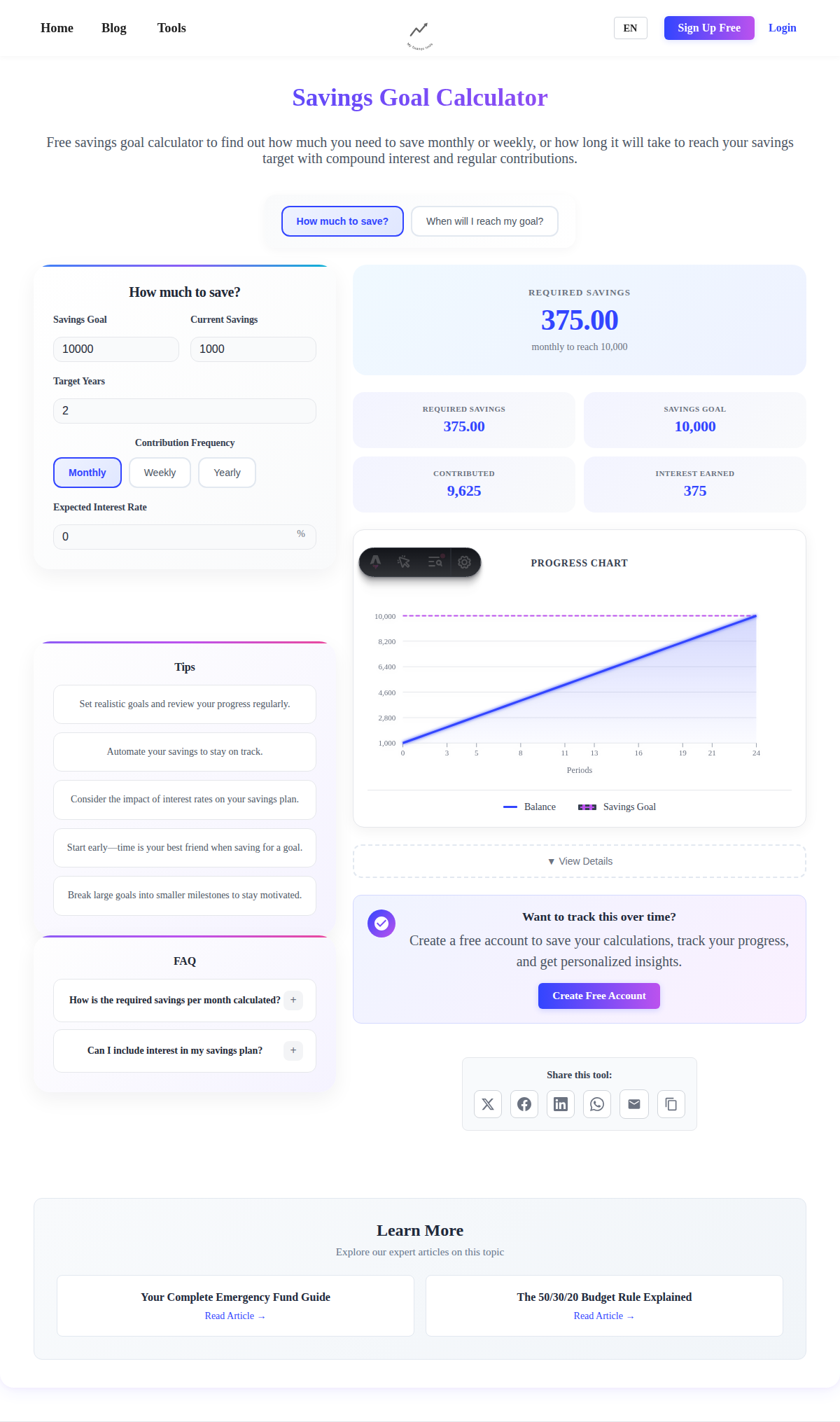
Savings Goal Planning: The Savings Goal Calculator can help you create a systematic plan to reach your emergency fund target.
Helpful Formulas
Basic Emergency Fund Target: Monthly Essential Expenses × Target Months (3-6) = Emergency Fund Goal
Monthly Savings Required: Emergency Fund Goal ÷ Timeline (months) = Monthly Savings Needed
Years to Build Fund: Emergency Fund Goal ÷ (Monthly Savings × 12) = Years to Complete
Conclusion
Building an emergency fund is one of the most important financial steps you can take, regardless of where you live or what you earn. It’s the foundation that allows you to weather life’s inevitable storms without derailing your long-term financial goals.
Remember these key principles:
- Start where you are - Any amount is better than nothing
- Automate your savings - Make emergency fund building effortless
- Choose appropriate accounts - Balance safety, liquidity, and growth
- Adjust for your situation - Consider your job security, family needs, and local safety nets
- Maintain and replenish - Keep your fund current and restore it after use
The path to financial security begins with your first emergency fund contribution. Whether that’s $25 or $250, start today. Your future self will thank you when life’s next unexpected challenge comes your way.
An emergency fund isn’t just money in the bank—it’s peace of mind, financial freedom, and the confidence to take calculated risks that can improve your life. It’s the difference between surviving and thriving when faced with life’s inevitable uncertainties.
Use our Emergency Fund Calculator to determine your personalized target and create a plan to get there. Start building your financial safety net today, and join the financially prepared minority who can handle whatever life throws their way.
This article provides general guidance on building emergency funds and should not be considered personalized financial advice. Emergency fund strategies may vary based on individual circumstances, local regulations, and available financial products. Always consider your specific situation and consult with qualified financial professionals when needed.